
Panoramix Limited in 2025: Strategic Growth and Global Reach in IP Law

2025 was a defining year for Panoramix Limited. Not just in terms of growth, but in how we strengthened our capability, expanded our reach, and continued to deliver high-quality, commercially focused IP support to clients around the world.

Here’s a look at what shaped our year, and why it matters for our clients.

Growing with Purpose

This year, our team grew from 11 to 14, carefully expanding our expertise to meet increasing client demand. Growth at Panoramix is never about numbers alone, it’s about building the right capability to deliver responsive, specialist IP advice at scale.

At the same time, we transitioned to a fully remote model, with team members now based across London, Manchester, Newark, Nottingham, Ireland, Belfast, Essex, Lincoln and Grantham. This allows us to attract top talent and remain agile, while maintaining close collaboration and consistent client service.

A Stronger Digital Foundation

In 2025, we launched our new Panoramix IP website, designed to be clearer, faster and genuinely client-focused. More than a visual refresh, the site reflects how we work today: modern, accessible and built around practical IP guidance rather than legal complexity.

The new website also makes it easier for businesses to take the first step, with free IP clinics now bookable directly online. These sessions give founders and growing businesses access to expert insight early on, helping them understand their IP position and next steps with confidence.

Global Presence, Local Expertise

In 2025, our team attended INTA in San Diego, the world’s leading intellectual property conference. Being part of this global forum allowed us to connect with international peers, deepen cross-border relationships, and stay closely aligned with emerging developments shaping IP strategy worldwide — insight we bring directly back to our UK clients.

We also continued our position as the number one IP firm for filing US trade mark applications for UK clients, reinforcing our reputation for cross-border expertise and trusted US market access.

Panoramix team attend INTA in San Diego, 2025

Clients Who Trust Us to Deliver

In 2025, we onboarded more than 200 new clients, ranging from ambitious startups to global brands including British American Tobacco and Commodore.

This growth reflects what our clients value most: clear advice, commercial thinking, and a genuine partnership approach to protecting and scaling IP.

Supporting Innovation Beyond IP

This year, we secured referral partnerships with Endorsing Bodies supporting the Innovator Leave to Remain Visa, enabling founders and scale-ups to access joined-up support for both immigration and IP strategy.

We also proudly sponsored Lincoln City Football Club, reinforcing our commitment to supporting local communities alongside global businesses.

Football pitch and grandstand
Panoramix branding on the LED advertising boards during the EFL Sky Bet League One match between Lincoln City and Wrexham at LNER Stadium, Lincoln.
Picture: Chris Vaughan Photography for Lincoln City FC
Date: May 3, 2025

Smarter IP Through Practical AI

In 2025, we integrated AI into workflows across the business as a practical tool to enhance efficiency, consistency and insight. AI supports our team where it makes sense, while expert judgment and strategic thinking remain firmly human-led.

Looking Ahead

Everything we achieved in 2025 was driven by one goal: helping clients protect, commercialise and grow their IP with confidence.

As we look to 2026, we’re focused on building on this momentum with the same clarity, collaboration and commercial focus that define Panoramix.


If you’re thinking about strengthening your IP strategy in the year ahead, we’d love to talk.

UKIPO Official Fees to Rise in April 2026 — What It Means for Your IP Strategy

The UK Intellectual Property Office (UKIPO) has announced a significant update to its official fee structure, with fees for patents, trade marks and designs set to increase by an average of around 25% from 1 April 2026, subject to parliamentary approval.

As the first major fee rise in many years — with trade mark fees unchanged since 1998, design fees since 2016 and patent fees since 2018 — these changes will directly affect how businesses plan, prioritise and budget for intellectual property protection.

For many organisations, the increases highlight the growing importance of a well-considered IP strategy, where decisions about what to protect, when to file and how to manage portfolios are aligned closely with commercial goals.

Person using a calculator and sitting at a desk with a paper document.

Why the Fee Increases Are Happening

The UKIPO has absorbed rising operational costs for years by improving internal efficiencies and investing in digital services. However, with inflation rising by approximately 32% since 2016, the Office has concluded that a fee reset is necessary to maintain high-quality services.

What Will Change — Key Examples

Though the full fee schedule will be published in detail by the UKIPO early in 2026, some notable changes already highlighted include:

Patent fees:

  • Patent online search fee rising from £150 to £200
  • Substantive examination online fees increasing from £100 to £130
  • Significant increases in renewal fees across patent terms, especially in later years

Trade Marks:

  • Online application fee increasing from £170 to £205
  • Renewal fee rising from £200 to £245
  • Fees for oppositions and invalidations increasing by around 20–25%

Registered Designs:

  • Simple online design applications rising from around £50 to £60
  • Multi-design applications similarly increasing across the bands

While these changes might initially seem steep, even the revised UKIPO fees are still competitive with many other global offices — meaning the UK remains an attractive jurisdiction for securing IP protection.

Intellectual property words with a hand pointing towards a search icon.

Why Acting Early Can Reduce Costs and Strengthen Your IP Strategy

With the current fee structure remaining in place until 31 March 2026, innovators and rights holders have a valuable opportunity to file applications or manage renewals in advance, securing lower official fees.

Acting early not only helps control costs but also allows businesses to take a more proactive IP strategy, aligning filing decisions with commercial priorities before the higher fees come into effect. For example:

  • Trade mark and design renewals (which can be filed up to 6 months before expiry) may be submitted at current rates if filed by 31 March 2026.
  • Patent renewals (available up to 3 months in advance) may similarly be accelerated where appropriate.

Early planning and accurate forecasting of your IP filing calendar can substantially reduce official costs — and it’s one area where professional guidance makes a real difference.

Why Professional Representation Still Matters — Especially with Fee Changes

With higher official fees on the horizon, many businesses will naturally seek ways to manage costs, but attempting to navigate filings and deadlines alone can be risky. Here’s how Panoramix adds value in this evolving landscape:

1. Strategic Cost-Optimised Filing and Renewal Planning

Panoramix helps clients identify the best timing for filing or renewing rights to avoid unnecessary increases. This is especially important when there are opportunities to file before fee hikes take effect. Careful portfolio management and early renewal assessment can save significant sums in official fees.

2. Expertise in Complex Filings Reduces Errors and Delays

Official fee structures often come with procedural conditions that, if overlooked, can lead to additional costs or lost rights. Panoramix’s experienced solicitors and attorneys ensure applications are correct, complete, and optimised to avoid rejections, extensions, or repeat filings, which can be costly both in fees and time.

3. Tailored Advice for International and Multi-Jurisdiction Strategies

Many businesses use UK filings strategically. For example, as priority filings under the Paris Convention before global expansion. Increasing UKIPO fees underscores the need for holistic cost planning across jurisdictions. Panoramix draws on cross-jurisdictional expertise to advise on the most cost-efficient global pathways.

4. Proactive IP Portfolio Audits and Budget Forecasting

With fee increases planned, rights holders benefit from a forward-looking audit of their IP portfolios. Panoramix offers proactive reviews to help you budget ahead, plan renewals and assess the ongoing value of each right. This ensures you invest in the rights that matter most.

5. Dedicated Support Through System Modernisation

As the UKIPO continues to enhance its systems and processes — partly funded by the forthcoming fee increases — Panoramix ensures clients are supported through any procedural changes or new digital requirements that may accompany these updates.

Final word

The UKIPO fee increases taking effect in April 2026 present a clear signal: intellectual property protection in the UK remains a strategic priority, but costs are changing. By planning ahead and partnering with experienced professionals like those at Panoramix, your business can navigate these changes efficiently, protect vital assets, and potentially mitigate the impact of higher official fees.


Now is the time to review your IP strategy — before fees go up. Panoramix is here to help you make the most of every opportunity. Contact us today for tailored advice on filing and renewal timing, cost-effective portfolio management, and building an IP strategy that supports your long-term commercial goals.

How Much Does a Patent Cost UK?

In the world of innovation and intellectual property, securing a patent can be a pivotal step for inventors and businesses alike. A patent not only protects an invention from being copied but also enhances its commercial value by establishing a legal barrier against competitors. However, one common question that arises is: “How much does a patent application cost UK?” This article aims to shed light on the costs associated with patenting an idea in the UK and the factors influencing these costs. Understanding these elements is crucial for making informed decisions about protecting your intellectual property.

When considering the cost of a patent, it’s important to understand that the expenses can vary significantly based on several factors. These include the complexity of the invention, the legal assistance required, a law firm’s fee structure, and the ultimate geographical scope of the patent protection. Each of these elements can affect both the immediate costs and the long-term financial commitments associated with maintaining a patent. Furthermore, the nature of the technology or process being patented can also play a role in determining costs, as some fields may require more extensive documentation or specialized knowledge. For example, a machine learning or biotechnology patent application is likely to cost more than an application for a new tool or automotive component.

Initial Application Fees

The first step in securing a patent is filing an application with the UK Intellectual Property Office (IPO). The initial application fee for a UK patent is £60 if paid at the timing of filing the application, and £75 if paid within 12 months of the filing date. This fee covers the basic cost of processing your application. 

Search and Examination Fees

A search fee of £150 is required to assess whether your invention is novel and inventive. This can again be paid when filing the application or within 12 months of the application date. This search is crucial as it provides an indication of the originality of your invention by comparing it against existing patents. If your decide to continue with your application after the search stage, you will then need to pay an examination fee of £100 to move forward with the process. This fee is due within 6 months of the date of publication of your application. The publication date will be approximately 18 months after filing of the application. Examination ensures that your invention meets all patentability criteria. The examination process can be quite detailed, often requiring clarifications or amendments to the application to align with the legal standards set by the IPO.

Legal and Professional Fees

While it’s possible to file a patent application without legal assistance, most inventors choose to hire a patent attorney to ensure their application is correctly drafted and filed. Legal fees can vary, but it’s not uncommon for attorney costs to range from £2,000 to £10,000 or more, depending on the complexity of the invention. We strongly advise against self-filed patent applications. It takes patent attorneys many years to hone their skills and qualify as Chartered and European patent attorneys. Most applications that are self-filed by inventors in deficient in some way, in many cases severely limiting the effectiveness of a patent, if it grants at all.

Renewal Fees

Once your patent is granted, you must pay annual renewal fees to maintain its validity. In the UK, patents last for up to 20 years from the filing date, provided renewal fees are paid annually. These fees start at £70 in the 4th year and increase incrementally to £610 in the 20th year. This incremental increase reflects the growing value and maturity of the patent as it progresses through its lifespan. Missing these payments can lead to the patent lapsing, which would relinquish your exclusive rights to the invention, making it essential to plan for these ongoing expenses. By working with a patent attorney, these deadlines will be monitored on your behalf. Of course this will increase the cost of renewing your patent but the additional fee is a small price to pay for peace of mind.

International Patent Protection

If you wish to protect your invention beyond the UK, you may need to consider filing for international patent protection. The cost of obtaining patents in other countries can be significant, often requiring separate applications and additional legal fees. This process can be complex, as different countries have distinct patent laws and application procedures. Engaging with an experienced attorney who understands international patent law is essential to navigate these complexities and ensure that your invention is adequately protected in your target markets.

How Much Does It Cost to Patent an Idea?

The overall cost to patent an idea in the UK can vary depending on the factors mentioned above. It is important to be aware of ongoing costs. As a general guide, you would be looking at the following costs to protect an idea in the UK:

  • Prepare and file a patent application – £1,000 – 10,000 + £60 filing fee + £150 search fee
  • Review and advise on search report – £500 – 1,500
  • Review publication document and report – £225
  • Request examination – £225 + £100 examination fee
  • Review, report, and respond to examination report – £300 – 1,500 (there may be several rounds of examination)
  • Review grant document and report – £225
  • Renewal fees – £250 per year + official maintenance fees of between £70 – 610 depending on the renewal year

Most of the cost arises prior to filing the patent application. Applications that are at the lower end of the cost scale may be simple innovations that lend themselves well to being partially drafted by commercially available AI tools.

How to Reduce Patent Costs

Securing a patent can be a costly endeavor, but there are steps you can take to minimise expenses:

Conduct a Preliminary Search

Before filing a patent application, conduct a preliminary search to ensure your invention is unique. This can save you from pursuing an application that is unlikely to succeed, thereby avoiding unnecessary expenses. A thorough search can reveal existing patents that could impede your application, allowing you to adjust your invention or approach accordingly. This proactive step can significantly increase your chances of a successful application while reducing wasted time and resources. Commercially available tools such as Pat Snap allow for accurate semantic searches minimising patent attorney costs incurred in performing the search and evaluation.

Tailor the scope of your application

Ongoing costs during the application process can be minimised by tailoring the scope of your application, particularly the claims, from the outset. If your claims are too broad, you are running a losing battle with the examiner in attempting to overcome needless prior art rejections. There is an art in presenting claims that are not too broad but yet do not unduly limit the scope of protection you are seeking. If your claims are too narrow they may well sail through examination but the ultimate scope of protection may lack commercial utility. One strategy is to amend your claims after receipt of the search report to ensure that the claims that are examined have the best possible chance of being accepted.

Provide a comprehensive invention brief to your Patent Attorney

It cannot be stressed enough how important it is to provide all information relating to your invention at the point of instructing your patent attorney.Not only will this initial disclosure be used as the basis for your application but if your attorney has all the information he/she needs to draft the application from the outset it avoids cost creep resulting from change in patent direction later.

Choose the Right Patent Attorney

Selecting a knowledgeable patent attorney can make a significant difference in the quality and success of your application. Look for attorneys who offer competitive rates and have experience in your specific industry. An attorney with relevant industry expertise can provide tailored advice and insights, enhancing the strength of your application. Attorneys that have additional qualifications and expertise in other areas of law and jurisdictions can add value to your patent strategy. Additionally, building a good rapport with your selected attorney can streamline the process, ensuring efficient handling of your case and potentially lowering costs through effective communication.

Conclusion

Understanding the costs and duration of a patent in the UK is crucial for inventors and businesses seeking to protect their intellectual property. While the initial application fees are relatively modest, additional expenses during the application process, renewal fees, and international protection can add up. Careful budgeting and strategic planning are essential to ensure that patent protection aligns with both short-term needs and long-term business objectives.

By carefully considering these factors, you can effectively manage the financial aspects of patenting your invention. Ultimately, a well-managed patent strategy can provide significant benefits and ensure that your innovation is protected for years to come. This foresight not only safeguards your intellectual property but also strengthens your position in the market, paving the way for continued success and innovation.

How to File a Patent Application in the UK

Protecting your innovation is crucial, and filing a patent is one of the most effective ways to secure your intellectual property. If you’re developing a new product, process, or invention in the UK, understanding the patent application process can help you safeguard your ideas and maximise commercial value. Here’s how to file a patent application in the UK.

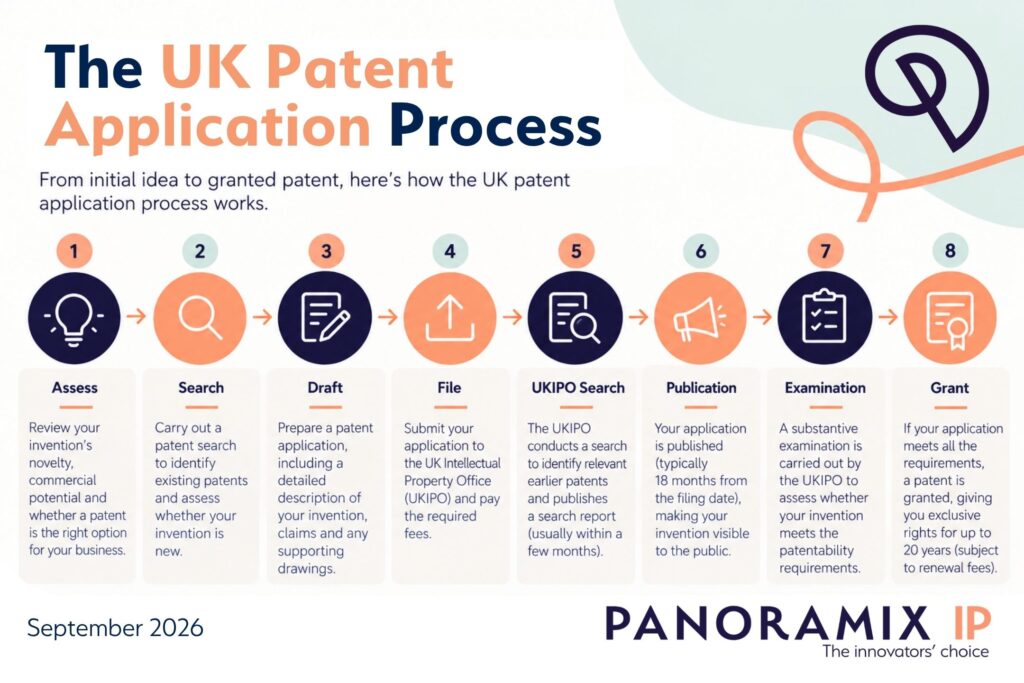
1. Confirm Your Invention Is Patentable

Before starting, ensure your invention meets the UK Intellectual Property Office (UKIPO) criteria:
  • Novelty: Your invention must be new and not disclosed anywhere in the world. You can use search tools such as Espacenet and Google Patents to search for earlier patents.
  • Inventive Step: It must not be obvious to someone skilled in the relevant field.
  • Industrial Applicability: The invention must be capable of being made or used in industry.
  • Not Excluded: Abstract ideas, mathematical methods, and some business methods are not patentable.
Tip: Conduct a preliminary novelty search to check if similar patents exist.

2. Prepare Your Patent Specification

A strong application starts with a well-drafted patent specification, which includes:
  • Title: Brief and descriptive.
  • Description: Detailed explanation of your invention and how it works.
  • Claims: Define the scope of protection you’re seeking.
  • Drawings: To illustrate your invention.
  • Abstract: Concise summary.
Recommendation: Professional drafting significantly increases your chances of success and can save time in the long run. The cost of drafting your application can vary from £1,500 – £10,000 depending on complexity and the firm that you decide to work with.

3. File Your Application with the UKIPO

You can file your patent application online or by post.
The initial filing requires:
  • Patent specification (description, claims, drawings, abstract)
  • Completed application form (Form 1) and request for search (Form 9A)
  • Payment of the filing fee – £60 if you file online. If requesting search, you also need to pay the search fee of £150.
Note: You can also request examination at the point of filing if needed.

4. Receive Your Filing Date

Once filed, you’ll receive an official filing date. This is critical, as it establishes your priority over later applications for the same invention.

5. Search and Publication

  • Search Request: Submit Form 9A and pay the search fee within 12 months of filing (usually at the time of filing). The UKIPO will conduct a search for prior art.
  • Publication: Your application is published 18 months after your filing (or priority) date.

6. Examination

Request substantive examination (Form 10) within six months of publication (again, this can be requested at the time of filing) and pay the £100 fee. The UKIPO will assess if your invention meets all legal requirements. You may need to respond to objections or amend your application.
If working with a patent attorney (which we strongly recommend), you can expect to pay between £1,000 – £2,000, at least, during examination to progress your application to grant.

7. Grant and Maintenance

If your application is accepted, the UKIPO will grant your patent . You’ll need to pay annual renewal fees to keep your patent in force. Renewal fee start at £70 for the 5th year rising to £610 for the 20th year – see UKIPO patent renewal fees. We recommend working with a patent attorney to ensure that deadlines are met. A patent attorney should not be charging any more than £250 to renew a patent. If they are, you are paying too much.

Quick Tips for Success

  • Confidentiality: Don’t disclose your invention publicly before filing.
  • Professional Advice: Consider working with a qualified patent attorney to navigate complex requirements.
  • Global Protection: If you plan to file overseas, you will need to file applications in other countries within 12 months of your UK application (priority period).

Need Help with Patent Filing?

At Panoramix IP, we specialise in guiding inventors and businesses through the UK, EU, and US patent processes. Our experienced team can help you draft, file, and manage your patent application, ensuring your innovation is protected from day one.
Now that you know how to file a patent application in the UK, Contact us today to discuss your invention or get started with your UK patent application.

Get In Touch