Is Computer Software Patentable in the UK?

In the fast-evolving world of technology, protecting your innovations is crucial. As a software developer or business owner with unique software solutions, you might be wondering, “Is computer software patentable in the UK?” The answer isn’t straightforward, but understanding the intricacies of software patent application and software intellectual property can help you navigate this complex landscape.
software patent concept

Before diving into the specifics of UK law, it’s important to understand what a software patent is. A patent is a legal right granted for an invention, giving the patent holder exclusive rights to use, sell, or license the invention for a certain period. When it comes to software, the challenge lies in the fact that software is often seen as a set of instructions or algorithms, which are typically not patentable.

Definition and Purpose of Patents

A patent serves as a protective mechanism for inventors, offering them a temporary monopoly over their creations. This exclusivity encourages innovation by allowing inventors to potentially reap financial rewards from their inventions without the immediate threat of competition. In the context of software, this protection can be particularly complex due to the abstract nature of software as intellectual property.

Historical Perspective on Software Patents

The history of software patents dates back several decades, with various landmark cases shaping the current legal framework. Initially, software was not considered patentable due to its abstract nature. However, as technology evolved, so did legal interpretations, leading to a gradual shift towards recognizing software-related inventions under certain conditions. Understanding this history is crucial for grasping the nuances of current patent laws.

Global Variations in Software Patentability

Software patentability varies significantly across different jurisdictions. While some countries, like the United States, have more lenient patent laws regarding software, others, such as the UK, maintain stricter criteria. This global variation impacts international businesses and developers, requiring them to adapt their intellectual property strategies based on regional legal landscapes.

The UK Legal Framework

In the UK, the patentability of computer software is governed by the UK Intellectual Property Office (UKIPO). According to UKIPO, software as such is not considered patentable. This means that software cannot be patented solely because it is a program for a computer. However, there are exceptions to this rule.

Role of the UK Intellectual Property Office (UKIPO)

The UKIPO plays a crucial role in determining the patentability of software. It evaluates patent applications based on criteria such as novelty, inventive step, and industrial applicability. Understanding the UKIPO’s guidelines and procedures is essential for anyone considering filing a software patent in the UK.

Interpretation of “Software as Such”

The phrase “software as such” is a critical component of UK patent law. It implies that software cannot be patented merely for being a computer program. Instead, the software must contribute something beyond standard computing processes. This interpretation narrows the scope of software patentability, focusing on genuine technical advancements.

Exceptions and Case Law

While the general rule excludes software from being patented, exceptions exist. Over the years, various court cases have set precedents for what constitutes a patentable software invention in the UK. Analyzing these cases can provide valuable insights into how exceptions are applied and the types of software innovations that might qualify for patent protection.

When Is Software Patentable?

Technical Effect Requirement

For software to be patentable in the UK, it must demonstrate a “technical effect”. This means that the software should solve a technical problem in a novel and non-obvious way. Simply automating a known manual process using software is unlikely to meet this criterion.

Understanding Technical Effect

The concept of “technical effect” is central to software patentability. It refers to the ability of software to produce a tangible technical outcome that goes beyond mere data processing. For instance, software that optimizes energy consumption in devices or enhances data encryption techniques might be seen as having a technical effect.

Examples of Technical Effect

Examples of software with technical effects include programs that improve digital signal processing, enhance machine learning algorithms, or optimize network performance. These examples illustrate how software can contribute to technical fields, thereby qualifying for patent protection under the right circumstances.

Differentiating Technical and Non-Technical Software

Not all software possesses a technical effect. Differentiating between technical and non-technical software involves assessing the underlying problem the software addresses and the nature of its solution. This distinction is crucial for inventors seeking to navigate the patent application process successfully.

Integrated with Hardware

Another way software can be patentable is if it is integrated with new or existing hardware to produce a technical effect. This integration often leads to a synergistic outcome that can be considered for patent protection.

Synergy Between Software and Hardware

The integration of software with hardware can result in a synergistic effect, where the combination achieves results neither could accomplish independently. This synergy is a key factor in determining the patentability of software-hardware innovations.

Examples of Patentable Software-Hardware Combinations

Examples of patentable combinations include software that significantly improves the operation of new machinery or enhances the functionality of existing devices. These combinations highlight how software can extend beyond abstract ideas to create tangible advancements in technology.

Challenges in Demonstrating Integration

Proving the integration of software and hardware can be challenging. Applicants must clearly demonstrate how the software interacts with the hardware to produce a novel and non-obvious technical result. This often requires detailed documentation and expert analysis.

Steps to Apply for a Software Patent in the UK
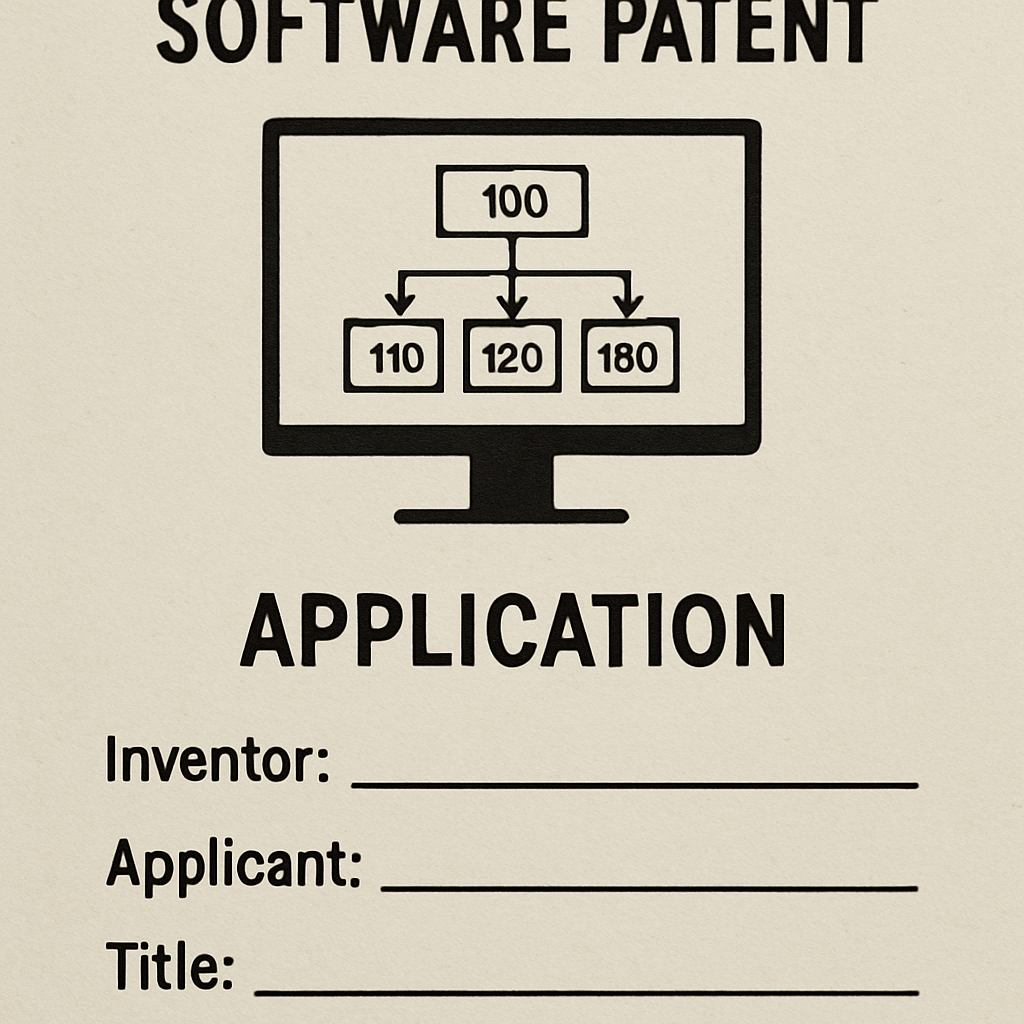
applying for a software patent

If you believe your software meets the criteria for patentability, here are the steps you need to follow to apply for a software patent in the UK:

Conduct a Patent Search

Before applying, conduct a thorough patent search to ensure your software invention is indeed novel. This means checking that no one else has patented a similar invention. The UKIPO and other international databases can be useful for this search.

Importance of a Comprehensive Patent Search

A comprehensive patent search is critical to avoid potential legal conflicts and ensure the novelty of your invention. This process involves examining existing patents and publications to verify that your software solution is unique and has not been previously disclosed.

Tools and Resources for Patent Searches

Various tools and databases, such as the UKIPO’s online search tools and international patent databases, can assist in conducting a thorough patent search. Leveraging these resources can provide valuable insights into existing patents and help identify potential overlaps.

Common Pitfalls in Patent Searches

Patent searches can be complex, and common pitfalls include overlooking similar inventions or misunderstanding patent classifications. Engaging a professional searcher or patent attorney can help mitigate these risks and ensure a comprehensive evaluation of existing patents.

Prepare a Detailed Patent Application

Your patent application should detail how your software works and how it achieves a technical effect. This involves providing diagrams, flowcharts, and descriptions that clearly illustrate the innovative aspects of your software.

Key Components of a Patent Application

A robust patent application includes several key components, such as a detailed description of the invention, claims defining the scope of protection, and drawings or diagrams illustrating the software’s functionality. Each component plays a crucial role in establishing the patentability of your software.

Crafting Clear and Precise Claims

The claims section of a patent application is particularly important, as it defines the boundaries of your invention’s protection. Crafting clear and precise claims requires a thorough understanding of both your software’s functionality and the legal language used in patents.

Importance of Visual Aids in Applications

Visual aids like diagrams and flowcharts can significantly enhance the clarity of a patent application. They provide a visual representation of how the software operates and interacts with hardware, making it easier for examiners to understand the technical contribution.

File the Application with UKIPO

Once your application is ready, file it with the UKIPO. The filing process can be complex, so it’s advisable to consult with a patent attorney who specializes in software patents. They can help ensure your application meets all necessary legal requirements.

Navigating the Filing Process

Filing a patent application with the UKIPO involves several steps, including completing forms, paying fees, and submitting necessary documentation. Understanding each step and ensuring compliance with UKIPO guidelines is crucial for a successful filing process.

Role of Patent Attorneys in the Filing Process

Patent attorneys play a vital role in guiding applicants through the filing process. Their expertise in patent law and understanding of technical details can help navigate potential challenges and increase the likelihood of a successful patent grant.

Timing and Deadlines for Filing

Timing is critical when filing a patent application. Applicants must be aware of deadlines for submitting documents, responding to examiner queries, and paying fees. Missing these deadlines can jeopardize the patent application process.

Examination and Approval

After submission, your application will be examined by the UKIPO. This process can take several months or even years. If your application meets all the criteria, you will be granted a patent, giving you exclusive rights to your software invention.

Understanding the Examination Process

The examination process involves a detailed review by UKIPO examiners to ensure the application meets legal and technical requirements. This includes evaluating the novelty, inventive step, and technical contribution of the software.

Responding to Examiner Queries

During the examination, examiners may raise queries or objections regarding the application. Responding to these queries promptly and effectively is crucial for addressing concerns and advancing the application towards approval.

Granting of the Patent and Post-Approval Considerations

Once a patent is granted, the inventor gains exclusive rights to their software invention. However, post-approval considerations include maintaining the patent through renewals and monitoring for potential infringements.

Challenges and Considerations

Cost and Time

Obtaining a software patent can be expensive and time-consuming. It’s important to weigh the potential benefits against the costs involved. Legal fees, application fees, and the time spent developing a comprehensive application can add up quickly.

Financial Implications of Patent Applications

The financial implications of patent applications extend beyond initial filing fees. They include costs associated with legal representation, patent searches, and potential international filings. Understanding these costs is crucial for budgeting and decision-making.

Timeframe from Application to Grant

The timeframe from filing a patent application to receiving a grant can be lengthy, often taking several years. This extended timeline requires applicants to strategically plan their patenting activities and consider interim measures to protect their innovations.

Evaluating the ROI of Software Patents

Evaluating the return on investment (ROI) of software patents involves assessing the potential revenue from licensing, market advantages, and competitive positioning against the costs incurred during the patenting process. This evaluation helps determine the overall value of pursuing a patent.

Alternatives to Patents

Given the challenges of obtaining a software patent, many companies choose to protect their software using other forms of intellectual property. Copyrights, for example, automatically protect the original code you write. Trademarks can protect the branding of your software, and trade secrets can protect proprietary algorithms or processes.

Copyright Protection for Software

Copyright protection automatically applies to original software code, safeguarding it against unauthorized copying or distribution. This form of protection is often more accessible and cost-effective compared to patents, making it a popular choice for many developers.

The Role of Trademarks in Software Branding

Trademarks protect the branding elements of software, such as names, logos, and slogans. They help build brand recognition and consumer trust, providing a different type of protection that complements other intellectual property measures.

Utilizing Trade Secrets for Proprietary Innovations

Trade secrets protect confidential information, such as algorithms and processes, that provide a competitive edge. Maintaining secrecy and implementing robust security measures are key to leveraging trade secrets effectively as an alternative to patents.

Keeping Software Competitive

software development team

by Campaign Creators (https://unsplash.com/@campaign_creators)

While patents can provide a competitive edge by preventing others from using your invention, the software industry often moves faster than the patent process. By the time a patent is granted, the technology might be outdated. Thus, continuously innovating and improving your software can be just as crucial as securing patent protection.

The Pace of Technological Change

The rapid pace of technological change in the software industry necessitates continuous innovation. Developers must stay informed about emerging trends, technologies, and consumer demands to remain competitive, regardless of patent status.

Balancing Patents with Agile Development

Balancing the pursuit of patents with agile development practices involves aligning intellectual property strategies with product development cycles. This approach ensures that innovations are protected without hindering the speed and flexibility required in software development.

Strategies for Maintaining a Competitive Edge

Maintaining a competitive edge requires a multifaceted approach, including investing in research and development, fostering a culture of innovation, and strategically managing intellectual property. These strategies help software companies thrive in a dynamic and competitive market.

Conclusion

In the UK, the patentability of computer software hinges on demonstrating a technical effect and often involves integration with hardware. While software as such is not patentable, innovations that solve technical problems in novel ways have the potential to be protected by a patent.

Navigating the software patent landscape requires a strategic approach, considering factors like cost, time, and the fast pace of technological change. Whether you choose to pursue a patent or rely on alternative intellectual property protections, understanding the legal framework in the UK is essential for safeguarding your software innovations.

For those in the software industry, staying informed about developments in intellectual property law can help you make the best decisions for protecting your creations. Whether it’s through patents or other means, ensuring that your innovations are secure will ultimately contribute to your success in the competitive tech landscape.


Panoramix IP x Envestors

Panoramix collaborates with Envestors

We are delighted to announce our collaboration with Envestors, a Home Office contracted endorsing body for the Innovator Founder visa route, an exciting step forward for Panoramix IP.

This collaboration means we can now provide tailored, cost-effective intellectual property solutions and strategic guidance to innovative entrepreneurs, post endorsement, seeking to establish and grow their ventures here in the UK.

Our dedicated support will assist Envestors’ post-endorsement referrals in enabling these talented individuals to secure their futures in this vibrant market.

Together with Envestors, we’re committed to fostering innovation, supporting economic growth, and empowering pioneering businesses to thrive.

Sebastian Lewis, the in-house IP lead at Envestors, shared:

“Envestors is excited to announce that we have secured a new Intellectual Property partner with significant expertise in safeguarding innovation and helping our Innovator Business Founders develop effective IP strategies.

A huge thank you to Kevin Hanson and his team for offering services that will support our clients in protecting their ideas and expanding their ventures.

We look forward to exploring future opportunities to collaborate further with Panoramix IP.”

We’re excited for the journey ahead and can’t wait to see the positive impact this partnership will bring to ambitious founders across the UK.

Kevin Hanson added:

“Our collaboration with Envestors is a great opportunity for Panoramix to build on its capabilities to support inward investment into the UK.

As with all new clients, we offer all referrals a free 45 minute IP clinic to help identify the needed IP support.

We have negotiated very competitive fixed fee costs for patent, trade mark and design filings in the UK which are exclusive to clients on the Innovator Founder Visa.

Personally, I am looking forward to seeing where this collaboration goes and working with the team at Envestors.”

If you are already on the Innovator Founder or Visa, or are planning to apply for it, please get in touch for advice on how intellectual property can help you secure your indefinite leave to remain:

• Call us: 01522 712 433
• Email: info@panoramixip.co.uk

How to Protect Your Design in the UK

If you’ve invested time, creativity, and resources into developing a new product or design, protecting your intellectual property is essential. In the UK, there are several ways to safeguard your design and ensure you maintain a competitive edge. Here’s a step-by-step guide how to protect your design in the UK.

1. Understand What Qualifies as a Design

A “design” in the UK refers to the appearance of a product, including its shape, configuration, pattern, or ornamentation. This could be anything from a piece of furniture to packaging, or even a logo. The key is that the design must be new and have individual character.

2. Consider Your Protection Options

You have two main options in the UK:

A. Unregistered Design Rights

  • Automatic Protection: As soon as you create and record your design, you get automatic protection for the shape and configuration (not surface decoration).
  • Duration: Up to 10 years after the design is first sold, or 15 years after it’s created—whichever comes first.
  • Limitations: Harder to enforce; you must prove when you created the design and that it’s original.

B. Registered Design Rights

  • Formal Registration: Register your design with the UK Intellectual Property Office (UK IPO).
  • What’s Protected: The look of the whole or part of a product, including lines, contours, colours, shape, texture, and materials.
  • Duration: Up to 25 years (renewable every 5 years).
  • Benefits: Easier to enforce, broader protection, and can deter potential infringers

3. Prepare Your Design for Registration

  • Documentation: Keep detailed records—drawings, CAD files, prototypes, and dated notes.
  • Confidentiality: Don’t disclose your design publicly before filing, unless necessary. If you must share it, use a non-disclosure agreement (NDA).

4. File Your Design Application

  • Where to Apply: Submit your application to the UK IPO (gov.uk/apply-registered-design).
  • What You’ll Need: Clear images of your design, a description, and payment of the application fee.
  • Tip: You can file online, and the process is relatively straightforward.

5. Enforce Your Rights

Once protected, you can:
  • Stop Others: Prevent others from making, selling, or importing copies of your design.
  • Take Legal Action: If someone infringes your rights, you can send a cease-and-desist letter or pursue legal action if needed.
  • License or Sell: You can license your rights to others or sell them outright.

6. Monitor and Maintain Your Protection

  • Renewals: For registered designs, remember to renew every five years.
  • Watch the Market: Monitor competitors and the market for potential infringement.
  • Keep Records Updated: Update your records if you make changes or improvements to your design.

7. Get Professional Help

Design protection can be complex, especially if you’re considering international markets. Consulting an intellectual property professional ensures you get the right protection and avoid costly mistakes.

Final Thoughts

Protecting your design in the UK is a smart business move—it helps safeguard your investment and gives you the confidence to grow your brand. Whether you opt for unregistered or registered rights, taking proactive steps now can save you time, money, and stress down the line.
Need advice? At Panoramix IP, we specialise in helping businesses Protect their designs in the UK and beyond. Reach out for tailored guidance and peace of mind.

What is a trade mark?

When building a brand, protecting your intellectual property is crucial. One of the most effective ways to do this is through trade marks. But what exactly can you trade mark in the UK? Here’s a straightforward guide to help you understand what qualifies—and what doesn’t.
A trade mark is a sign that distinguishes your goods or services from those of other businesses. It can be vital for brand recognition, customer trust, and legal protection.

What Can Be Trade Marked?

In the UK, you can trade mark any sign that can be represented clearly and precisely, provided it is distinctive and not descriptive of the goods or services. Common examples include:
  • Words: Brand names, company names, product names, slogans.
  • Logos: Graphic symbols, stylised words, emblems.
  • Shapes: Distinctive product shapes or packaging (think of the Coca-Cola bottle).
  • Colours: Specific colours or colour combinations (if they are distinctive for your brand).
  • Sounds: Unique jingles or musical notes (e.g., Intel’s chime).
  • Combinations: Any combination of the above, such as a logo with a slogan.

What Cannot Be Trade Marked?

Certain signs are excluded from trade mark protection in the UK, including:
  • Generic or descriptive terms (e.g., “Fresh Bread” for a bakery)
  • Marks that are misleading, offensive, or contrary to public policy
  • Common surnames or geographical locations (unless they have acquired distinctiveness)
  • Flags, emblems, or hallmarks protected by law
  • Shapes that result from the nature of the goods themselves

Key Considerations

  • Distinctiveness: Your mark must be unique enough to identify your business as the source of goods or services.
  • Non-Descriptive: Avoid marks that simply describe what you offer.
  • Use in Commerce: You must be using, or intend to use, the mark in connection with your goods or services.

Why Register a Trade Mark?

Registering your trade mark gives you exclusive rights to use it in the UK for the goods or services specified. This means you can:
  • Prevent others from using a similar mark
  • Build brand value and recognition
  • License or sell your trade mark as a business asset
  • Take legal action against infringement

How Panoramix IP Can Help

Navigating trade mark registration can be complex. At Panoramix IP, we handle every aspect—from initial searches and application drafting to portfolio management and enforcement. If you’re unsure whether your brand element is eligible for trade mark protection, we’re here to advise.

Ready to protect your brand?
Contact Panoramix IP for expert trade mark advice and a straightforward registration process.

How to File a Patent Application in the UK

Protecting your innovation is crucial, and filing a patent is one of the most effective ways to secure your intellectual property. If you’re developing a new product, process, or invention in the UK, understanding the patent application process can help you safeguard your ideas and maximise commercial value. Here’s how to file a patent application in the UK.

1. Confirm Your Invention Is Patentable

Before starting, ensure your invention meets the UK Intellectual Property Office (UKIPO) criteria:

Novelty:
Your invention must be new and not disclosed anywhere in the world. You can use search tools such as Espacenet and Google Patents to search for earlier patents.

Inventive Step:

It must not be obvious to someone skilled in the relevant field.

Industrial Applicability:
The invention must be capable of being made or used in industry.

Not Excluded:

Abstract ideas, mathematical methods, and some business methods are not patentable.

Tip: Conduct a preliminary novelty search to check if similar patents exist.

2. Prepare Your Patent Specification

A strong application starts with a well-drafted patent specification, which includes:
  • Title: Brief and descriptive.
  • Description: Detailed explanation of your invention and how it works.
  • Claims: Define the scope of protection you’re seeking.
  • Drawings: To illustrate your invention.
  • Abstract: Concise summary.
Recommendation: Professional drafting significantly increases your chances of success and can save time in the long run. The cost of drafting your application can vary from £1,500 – £10,000 depending on complexity and the firm that you decide to work with.

3. File Your Application with the UKIPO

You can file your patent application online or by post.
The initial filing requires:

– Patent specification (description, claims, drawings, abstract)

– Completed application form (Form 1) and request for search (Form 9A)

– Payment of the filing fee – £60 if you file online. If requesting search, you also need to pay the search fee of £150.

Note: You can also request examination at the point of filing if needed.

4. Receive Your Filing Date

Once filed, you’ll receive an official filing date. This is critical, as it establishes your priority over later applications for the same invention.

5. Search and Publication

  • Search Request: Submit Form 9A and pay the search fee within 12 months of filing (usually at the time of filing). The UKIPO will conduct a search for prior art.
  • Publication: Your application is published 18 months after your filing (or priority) date.

6. Examination

Request substantive examination (Form 10) within six months of publication (again, this can be requested at the time of filing) and pay the £100 fee. The UKIPO will assess if your invention meets all legal requirements. You may need to respond to objections or amend your application.

If working with a patent attorney (which we strongly recommend), you can expect to pay between £1,000 – £2,000, at least, during examination to progress your application to grant.

7. Grant and Maintenance

If your application is accepted, the UKIPO will grant your patent . You’ll need to pay annual renewal fees to keep your patent in force. Renewal fee start at £70 for the 5th year rising to £610 for the 20th year – see UKIPO patent renewal fees. We recommend working with a patent attorney to ensure that deadlines are met. A patent attorney should not be charging any more than £250 to renew a patent. If they are, you are paying too much.

Quick Tips for Success

  • Confidentiality: Don’t disclose your invention publicly before filing.
  • Professional Advice: Consider working with a qualified patent attorney to navigate complex requirements.
  • Global Protection: If you plan to file overseas, you will need to file applications in other countries within 12 months of your UK application (priority period).

Need Help with Patent Filing?

At Panoramix IP, we specialise in guiding inventors and businesses through the UK, EU, and US patent processes. Our experienced team can help you draft, file, and manage your patent application, ensuring your innovation is protected from day one.

Now that you know how to file a patent application in the UK, Contact us today to discuss your invention or get started with your UK patent application.

Should I trade mark my business name?

When launching a business, choosing the right name is a milestone moment. But once you’ve settled on that perfect name, a crucial question follows: should I trade mark my business name?
As an IP professional, I see this question come up almost daily. Here’s a practical look at why trade mark registration matters, the risks of skipping it, and what steps to consider.

What’s the Difference?

First, let’s clear up a common misconception: registering your business with Companies House or HMRC does not give you trade mark rights. Company registration simply means you’re legally allowed to operate under that name. It doesn’t stop someone else from using (or even trade marking) a similar name for their products or services.

Why Register as a Trade Mark?

1. Exclusive Rights
A registered trade mark gives you the exclusive right to use your business name for the goods and services it covers. This means you can stop others from using a confusingly similar name in your sector.
2. Stronger Legal Protection
Trade mark registration makes it much easier (and more cost-effective) to enforce your rights if someone tries to copy or piggyback on your brand.
3. Business Value
A registered trade mark is an asset. It can add value to your business, help attract investment, and make expansion or franchising simpler.
4. Peace of Mind
Knowing your brand is protected lets you focus on growth, not legal headaches.

What Happens If You Don’t Register?

  • You risk rebranding if someone else registers a similar name first.
  • You may have limited legal options if another business uses your name or a close variant.
  • You could lose out on building a unique, recognisable brand identity.

What Should You Consider?

  • Check availability: Is your name unique in your sector and region?
  • Think long-term: Will your business expand into new products, services, or countries?
  • Budget for protection: Trade mark registration is an investment, not just an expense.

Bottom Line

Registering your business name as a trade mark isn’t just for big brands. It’s a practical step for any company serious about protecting its reputation and future growth.
If you’re unsure where to start, consider seeking advice from an IP professional. The right guidance now can save you time, money, and stress down the line.

Have questions about trade marks or protecting your brand? Feel free to contact us – happy to help demystify the process.

How Long Does It Take to Register a Trademark in the UK?

When you’re building a brand, securing your trademark is a crucial step to protect your name, logo, or slogan. But one of the first questions business owners ask is: How long does it take to register a trademark in the UK? Let’s break down the UK trade mark process, typical timelines, and what you can do to make it as smooth as possible.

The UK Trademark Registration Process: Step by Step

Registering a trademark in the UK is a structured process managed by the UK Intellectual Property Office (UKIPO). Here’s what to expect:

1. Preparation and Filing

  • Trademark Search & Application: Before filing, it’s wise to conduct a thorough search to check for conflicting trademarks. Once ready, your application is submitted to the UKIPO.
  • Panoramix IP Turnaround: At Panoramix IP, we typically prepare and file trademark applications within 2 business days of receiving your instructions and required information.

2. Examination by UKIPO

  • The UKIPO examines your application for compliance and potential conflicts. If there are no issues, your application proceeds. If there are objections, you’ll need to address them, which can add time. This will happen approx. 2-3 weeks after the application is filed

3. Publication

  • If your application passes examination, it’s published in the UK Trade Marks Journal for 2 months (extendible to 3 months)to allow third parties to oppose the registration.

4. Registration

  • If no oppositions are raised (or any are resolved in your favour), your trademark is registered, and you’ll receive a certificate of registration.

Typical Timeline: From Start to Finish

  • Preparation & Filing: 1–2 days (with Panoramix IP)
  • Examination: Usually 2-3 weeks
  • Publication (Opposition Period): 2 months (extendible to 3 months)
  • Registration Certificate Issued: Shortly after the opposition period ends
Total UK trade mark timescale (if no objections or oppositions): Around 2.5 to 3 months from filing to registration
How long does a UK trade mark last: 10 years from the application date of the trade mark but it can be renewed indefinitely in 10 year increments

What Can Delay the Process?

  • Objections from UKIPO: If the examiner raises concerns, you’ll need to respond, which can add weeks or months.
  • Oppositions: If a third party opposes your application during publication, the process can be delayed significantly while the dispute is resolved.
  • Incorrect Application Details: Mistakes in the application, such as wrong classes or unclear goods/services, can lead to delays or even refusals.

How Panoramix IP Can Help

At Panoramix IP, our trademark specialists ensure your application is correctly prepared and filed, minimising the risk of delays. We also consider international filing requirement when applying to register a trade mark in the UK Our success rate for first-time registrations is exceptionally high, meaning most of our clients secure their trademarks quickly and smoothly.
Need help to apply for a trademark?
Contact Panoramix IP for expert guidance and a fast, reliable service.

Ready to protect your brand?
Let’s make United Kingdom trademark registration simple, fast, and hassle-free.

How much does it cost to oppose a trade mark application in the UK

If you’ve discovered a trade mark application that could threaten your brand or business, you might be considering a formal opposition. But how much does it actually cost to oppose a trade mark application in the UK? Here’s a clear breakdown of the process, key costs, and what to expect.

1. Official Fees

The UK Intellectual Property Office (UK IPO) charges an official fee to file a trade mark opposition. As of July 2025, the standard fees are:
  • £100 for opposing under section 5(1) and/or 5(2) of the Trade Marks Act 1994
  • £200 for opposing under any other grounds

2. Professional Fees

While it’s possible to oppose a trade mark yourself, most businesses choose to instruct an IP professional to maximise their chances of success. Professional fees can vary depending on the complexity of the case, the evidence required, and whether the matter is settled early or proceeds to a full hearing.
At Panoramix IP, our typical cost structure for a straightforward opposition is:
  • Initial assessment and filing: £500–£1,000 + VAT
  • Preparing evidence and submissions: £1,000–£2,500 + VAT (if required)
  • Attending a hearing (if necessary): £500–£1,500 + VAT
Total estimated cost:
For most standard cases, expect an overall investment of £700–£5,000 (including official fees and professional support). Complex or heavily contested cases may cost more.

3. Other Potential Costs

  • Settlement/Negotiation: Many oppositions settle before reaching a hearing, which can reduce costs.
  • Adverse Costs: If you lose, you may be ordered to pay a contribution towards the other party’s costs (usually a capped, modest amount).
  • Additional Evidence: If substantial evidence or expert reports are needed, this can increase the total cost.

4. Is It Worth Opposing?

Opposing a trade mark is an investment in protecting your brand. The cost of not acting, such as confusion in the marketplace or loss of rights, can be far greater. With a success rate of around 85% in our recent opposition and cancellation cases, Panoramix IP can guide you through the process and help you assess your options.

5. Next Steps

If you’re considering an opposition, early action is essential. The opposition window is just two months from publication (extendable to three months). Our team can review your situation, provide a fixed-fee quote, and handle the process from start to finish.

Need advice or a cost estimate?
Contact Panoramix IP for a confidential, no-obligation discussion about your trade mark opposition options.


Trade Mark Protection Matters for Football Clubs: How Lincoln City FC Stays Ahead of the Competition

Panoramix IP and LCFC: A Local Partnership with Global Potential

As proud sponsors of Lincoln City Football Club for the 2025/2026 season, we are delighted to support our local team both on and off the pitch. While our banner will be proudly displayed at all home games at the LNER Stadium next season, our partnership runs deeper than a few pitch-side LED displays.

During our initial research on choosing a local sponsorship partner, we discovered that the trade mark for the club’s iconic Imp logo did not yet have a registered trade mark. As part of our commitment to safeguarding brand identity and supporting our sponsorship partner, we were honoured to assist LCFC in registering their UK Trade Mark.

More than just a local business looking to support a Lincoln-based institution, this highlights the growing need for football clubs across the UK, from the Premier League to grassroots organisations, to recognise intellectual property protection as an essential pillar of sustainable growth, commercial success and protection for fans.


Why Must Football Clubs Protect Their Brand Assets?

Firstly, What is a Trade Mark?

For those new to intellectual property assets, a trade mark is a legally registered symbol, word, or phrase that is used to represent a business or organisation. In football, this often includes club logos, nicknames, icons and slogans. These identifiers are crucial components of a club’s brand and identity. For Lincoln City Football Club, the Imp logo is more than just an emblem. It’s a symbol of heritage, pride, and community, an instantly recognisable badge of honour for fans and players alike going back generations.

Lincoln City Football Club has wisely chosen to invest in protecting this logo to secure its future use.


The Risks of Not Registering

Without trade mark registration, clubs leave themselves vulnerable to imitation, unauthorised merchandising, and brand dilution. This can lead to reputational damage, lost revenue, and legal disputes that could easily be avoided, all of which could put clubs at risk.

With increased exposure through broadcast deals, social media, and international fan bases, even smaller clubs are at risk of their identity being copied or misused. Trade mark registration provides legal recourse and deterrent power to protect against such misuse.

How Trade Mark Protection Supports Business Growth

Creating New Revenue Streams

Registered trade marks open doors to licensing and merchandising opportunities. Clubs can grant permission to trusted manufacturers to use their logos on merchandise, ensuring brand consistency while generating revenue for the club. For LCFC, the Imp logo now has the legal foundation to be part of commercial products that support the club financially, especially when used on next season’s new kit design, or any products sold by LCFC, official distributors or licensees with the rights to sell products with the club Imp logo on.

Building Commercial Partnerships

In the modern sports industry, commercial partnerships rely heavily on brand equity. When clubs protect their intellectual property, they become more attractive to sponsors and investors who value brand consistency and legal clarity. Our decision to sponsor LCFC was bolstered by the club’s willingness to take its brand protection seriously, and through a shared understanding of the importance of brand protection through registered trade marks.

International Expansion

We know that football is a sport played, enjoyed and supported globally. Whether clubs are playing international friendlies, selling kits abroad, or engaging with fans online, a registered trade mark, when registered in the appropriate countries and jurisdictions, ensures that the brand remains protected across borders. This is particularly important for clubs like LCFC, which is poised for further growth beyond local boundaries, especially with the introduction of club initiatives like the innovation lab, which is generating domestic and international attention from strategic partners.

Why This Matters to Imps and to all fans of the beautiful game.

Preserving Heritage and Identity

To football fans, like the Imps, a club icon is not just a logo; it’s part of an iconic tradition, a cultural symbol, and a source of lifelong pride (depending on the result). Trade mark protection ensures that club insignia are preserved and safeguarded from misuse or distortion.

When clubs take action to protect their identity, they are also protecting the emotional investments of their supporters. Knowing that the club is actively working to defend its image fosters trust and loyalty within the fan base.

Ensuring Authentic Merchandise

Supporters want to wear their club’s badge with pride, knowing that every purchase supports the team and, with hope, increases their chances of going up next season. Trade mark protection allows clubs to control the production and distribution of official merchandise, ensuring high quality and financial return.

The Panoramix IP Approach to Supporting Football Brands

As an intellectual property law firm with the ability to file directly in the UK, EU, and US, Panoramix IP brings international expertise with local dedication. Our team of dual-qualified solicitors and attorneys work hand-in-hand with clubs to:

  • Audit current brand assets
  • Register trade marks nationally and internationally
  • Monitor and enforce against unauthorised use
  • Advise on licensing and sponsorship agreements

The work we’ve done with Lincoln City Football Club is a shining example of how timely IP protection can add value and security to a club’s operations.

A Call to Action for All Football Clubs

Whether you’re operating in the Premier League or the National League, intellectual property protection should not be an afterthought. It should be integrated into your club’s commercial, legal, and fan engagement and retention strategy from the outset.

Panoramix IP is here to help football clubs across the UK and beyond take charge of their brand identity. If you’re unsure whether your club’s trade marks are up to date or if you have unregistered brand assets in circulation, get in touch with our team for an initial consultation.

Let Lincoln City Football Club’s proactive approach be a model for others. Because protecting your club means protecting your legacy.

How Our Partnership with Intanify is Revolutionising Intellectual Property Audits

At Panoramix IP, we continually seek innovative ways to deliver enhanced value to our clients. With this in mind, we’re thrilled to announce our exciting new partnership with Intanify, a pioneering tech firm specialising in AI-driven intellectual property solutions. This collaboration significantly transforms how we perform IP audits, elevating the efficiency, accuracy, and effectiveness of our services.

The Adoption of AI Brings a New Era in Intellectual Property Management

Intanify is at the forefront of leveraging artificial intelligence to streamline routine yet crucial IP management tasks. Our recent conversation with Dylan Dryden, Intanify’s Co-founder and CEO, highlighted the powerful capabilities of Intanify’s platform. Dylan explained how their technology radically reduces the manual work traditionally involved in IP audits, enabling IP experts like our legal team to focus our efforts on strategic, high-value insights. With Intanify, we are reducing complexity and time with intelligent automation.
From experience, we know that typically, conducting an IP audit is a time-intensive task. It requires our legal professionals to meticulously review numerous documents, extract relevant information, and compile comprehensive reports. Traditionally, an audit could take seven plus hours, depending on the volume of documents to review, often leaving limited time for in-depth strategic advice, whilst keeping costs affordable for clients.

With Intanify’s advanced AI-driven platform, much of this manual workload is automated. By digitising standard audit questions and using AI to analyse extensive documentation rapidly, Intanify can accurately pinpoint crucial insights in a fraction of the usual time. During our call, Dylan shared an example where the Intanify platform efficiently reviewed 150 documents, a process that would typically require significant human hours spent reading and examining, highlighting the incredible efficiency and precision of their system.


With Intanify, Panoramix IP Delivers Superior Insights and Strategic Value

Thanks to Intanify’s automation, our solicitors and attorneys are now able to invest their valuable time where it matters most for our clients, interpreting insights, identifying opportunities, and addressing risks strategically for better IP protection.

Rather than receiving previously more dense, standardised reports, our clients also benefit from highly focused advice that directly impacts their IP strategies and business outcomes.

Dylan shared a compelling case where Intanify’s tech powered another IP firm , showcasing how their combined approach resulted in clients proactively addressing critical IP matters immediately. This case resulted not just in a successful IP audit report, but also in significant strategic actions, including the client choosing to file new patents, rectify trade mark issues, and the implement essential trade secret policies, all off the back of the detailed IP audit report and strategic insight the firm was able to offer.


Making Intellectual Property a Dynamic Asset

In our own experience, traditionally, IP audits often produce static reports that can quickly become outdated. Intanify changes this by transforming the traditional IP audit into an ongoing, interactive management tool. For example, instead of a one-off 25-page PDF document, clients receive access to a live asset register that continually evolves as their business grows and changes and documents or policies are added.

Intanify’s suite keeps clients actively engaged with their IP assets, making it easier to update, manage, and protect these assets effectively. Much like how businesses actively manage physical assets, Intanify enables organisations of all sizes to apply similar rigour to their intellectual property, ensuring their IP strategies remain current, robust, and aligned with their business objectives.


What Does This Mean for our Clients at Panoramix IP?

Our partnership with Intanify directly enhances the value we deliver to our clients. Through advanced AI automation, our clients can expect:

  • Faster, more efficient IP audits: Reducing audit completion time significantly, allowing quicker decision-making.
  • Strategically actionable insights: Detailed analysis provided swiftly, ensuring clients receive maximum strategic benefit.
  • Continual asset management: Live asset registers that evolve, ensuring IP protection strategies remain robust and relevant.
  • Cost efficiency: Reduced manual effort translates to cost savings, allowing us to offer competitive pricing without compromising quality.

A recent example discussed with Dylan involved a recent client of ours, who, for confidentiality reasons , we cannot name, who noted substantial improvements using Intanify compared to traditional methods they had experienced previously. Initially sceptical, they quickly recognised the tangible benefits, highlighting enhanced strategic insights and improved value-for-money, ultimately leading to additional proactive IP protection measures being implemented, and them choosing to go ahead with us at Panoramix IP.
This partnership reflects our dedication to continuous improvement and innovation, and is one of many adoptions of AI technology that we have onboarded this year to improve the service to our clients. By integrating Intanify’s technology, we’re reinforcing our commitment to delivering cutting-edge IP services and strategic advice that truly benefits our clients.
Dylan emphasised that Panoramix IP’s integration with Intanify not only enhances our service delivery but also places us distinctly ahead in an increasingly competitive market. This partnership empowers us to provide unparalleled value through deeper, more meaningful client engagements, significantly raising the bar for IP management practices.

For more information, get in touch with us

To explore how this innovative approach can enhance your IP strategy, we invite you to contact us. Let’s discuss how our partnership with Intanify can transform your IP management, safeguarding and elevating your organisations IP potential.
For more information on Intanify and their groundbreaking approach, visit their official website.

Get In Touch