
Panoramix IP Expert

Someone Is Using My Trade Mark In Their Website Domain Name: What Can I Do?

Discovering that someone else has registered a domain name using your registered trade mark can be frustrating, particularly if they’re using it to sell similar products, divert customers or simply prevent you from using your own brand online.

While owning a registered trade mark does not automatically give you ownership of every matching domain name, it can provide you with strong legal grounds to challenge the registration or use of that domain in certain circumstances.

In this guide, our Nottinghamshire IP Lawyers will explain your rights, the options available to you, and how to resolve a domain name dispute.


Does Owning a Trade Mark Automatically Give You the Domain Name?

No. Registering a trade mark does not automatically give you ownership of the matching domain name.

A trade mark and a domain name are two separate rights that must each be obtained independently. Registering your business name as a trade mark does not reserve the corresponding website address, and purchasing a domain name does not give you ownership of the trade mark.

For example, you could successfully register the trade mark Bills Coffee, only to discover that billscoffee.co.uk or billscoffee.com has already been registered by someone else. Equally, someone may own a domain name without having any registered trade mark rights.
This is why it’s important to secure both your trade mark and your preferred domain name as early as possible when launching a new brand.


When Could a Domain Name Infringe Your Trade Mark?

If someone else owns the domain name that matches your registered trade mark, this does not automatically mean that they are committing infringement.

However, you may have grounds to take action if the domain:

  • Is identical or confusingly similar to your registered trade mark.
  • Is being used in connection with similar goods or services.
  • Is likely to mislead customers into believing there is an association with your business.
  • Takes unfair advantage of your brand’s reputation.
  • Damages the distinctive character or reputation of your trade mark.

For example, if your registered trade mark is Bills Coffee, and someone registers billscoffee.co.uk to sell competing coffee products, this could potentially infringe your trade mark rights.

An experienced domain name IP lawyer can assess your position, advise whether you have a potential claim, and advise on the most appropriate course of action. We’d recommend booking a free 45-minute consultation with one of our specialists at Panoramix IP, who can support with your next steps.


What If Someone’s Using My Trade Mark In a Domain That Isn’t In Use?

Sometimes you’ll discover that the domain simply displays a holding page, advertisements or a message stating that it is for sale.

Even if the domain is inactive, you may still have options.

In some cases, registering a domain primarily to prevent the legitimate trade mark owner from using it, or to sell it back for profit, may be considered evidence of bad faith.

Inactive domains can therefore still become the subject of a successful domain name dispute, depending on the circumstances.


What Is Cybersquatting?

Cybersquatting is the practice of registering a domain name that incorporates another person’s trade mark or brand with the intention of benefiting from their reputation.

Common examples include:

  • Registering a well-known business name before the genuine owner can.
  • Purchasing domains that closely resemble established brands.
  • Registering common misspellings of popular websites (known as typosquatting).
  • Attempting to sell the domain back to the trade mark owner for an inflated price.
  • Using the domain to divert customers to a competing business.

Cybersquatting is a common cause of domain name disputes, and there are established procedures available to challenge these registrations.

If you believe someone is cybersquatting on your brand or domain name, our experienced domain name lawyers are here to help. Get in touch with a member of our team today!


How Can You Recover a Domain Name?

If someone has registered a domain name that infringes your trade mark rights or has been registered in bad faith, you may be able to challenge the registration and recover the domain. The most appropriate course of action will depend on factors such as the domain extension, the circumstances of the registration and the evidence available.

For .uk and .co.uk domain names, disputes can often be resolved through Nominet’s Dispute Resolution Service (DRS), while disputes involving .com, .net, .org and many other international domain extensions are typically handled under the Uniform Domain Name Dispute Resolution Policy (UDRP).

Navigating these procedures can be complex, particularly where trade mark rights, allegations of bad faith or competing claims to a domain name are involved. Seeking specialist legal advice at an early stage can significantly improve your chances of reaching a successful outcome.

At Panoramix IP, our experienced domain name dispute lawyers regularly advise businesses on recovering domain names, defending against disputes and protecting valuable brands online. We’ll assess the strength of your case, explain the options available and guide you through the most appropriate dispute resolution process, helping you protect your intellectual property with confidence.


What Evidence Can Help With A Domain Name Dispute?

When disputing a domain name, the stronger your evidence, the stronger your position.

Useful evidence may include:

  • Your registered trade mark certificate.
  • Evidence showing when you first started using your brand.
  • Screenshots of the website using the disputed domain.
  • Examples of customer confusion.
  • Marketing materials demonstrating your reputation.
  • Correspondence with the domain owner.
  • Evidence suggesting the domain was registered in bad faith.

Collecting evidence early can help support any negotiations or formal dispute proceedings. At Panoramix IP, we support domain name dispute claimants to collect the necessary evidence for a successful claim.


How to Protect Your Brand Online

While domain name disputes cannot always be avoided, there are several steps you can take to reduce the risk:

  • Register your trade mark as early as possible (We now offer quick and easy online filing service for UK and US trade marks!)
  • Secure the main domain extensions for your business, including .co.uk, .uk and .com where appropriate.
  • Register common spelling variations of your brand.
  • Monitor new domain registrations that may affect your business.
  • Consider international trade mark protection if you operate overseas or plan to expand.

Taking a proactive approach to brand protection is often far less costly than resolving a dispute later.


Get Help with a Domain Name Dispute

If someone has registered or is using a domain name that incorporates your trade mark, don’t wait to take action. We can help!

At Panoramix IP, our experienced domain name dispute lawyers advise businesses of all sizes on trade mark infringement, domain name disputes and brand protection strategies. We can assess your legal position, explain the options available and help you pursue the most effective resolution for your circumstances.

If you’re concerned that someone is using your trade mark as their domain name, get in touch with our team today to discuss your options.

What To Do If Someone Has Trade Marked Your Business Name

Discovering that someone else has registered your business name as a trade mark can be incredibly worrying, and it’s something our trade mark specialists are regularly asked about. Whether you’ve received a cease and desist letter, discovered a conflicting registration while carrying out your own checks, or are simply concerned about your legal position, you came to the right place.

The good news is that a registered trade mark doesn’t automatically mean you have to stop trading or rebrand your business. The options available will depend on several factors, including who started using the name first, the goods and services the trade mark covers, and whether the registration is valid.

In this guide, our international trade mark specialists explain what it means if someone has trade marked your business name, the steps you should take, and how you can protect your rights moving forward.


Can Someone Trade Mark My Business Name?

Yes, if your business name meets the legal requirements for registration and hasn’t already been protected by someone else, another party may be able to register it as a trade mark.

However, it’s important to understand that a business name and a trade mark are not the same thing. Registering a company name with Companies House (or other governing body) simply creates a legal business entity. It does not automatically give you exclusive rights to use that name or prevent other businesses from using similar names.

A registered trade mark, on the other hand, provides the owner with exclusive rights to use that mark in relation to the goods and services for which it is registered. This means two businesses with similar names may be able to coexist if they operate in completely different sectors, while businesses trading in the same market are more likely to encounter issues.

This is why registering your business name as a trade mark is often just as important as incorporating your company.

If you haven’t yet registered your business name as a trade mark, we advise that you do so as early as possible. At Panoramix IP, our trade mark specialists support businesses of all sizes with UK, US, and international trade mark registrations. If you’re ready to secure your business name, check out online, or get in touch with our team to start your trade mark application today.


How Do I Check If Someone Has Trade Marked My Business Name?

Before taking any action (or panicking), it’s important to establish exactly what has been registered.

A good starting point is the UK Intellectual Property Office (UKIPO) trade mark register. This allows you to check whether a trade mark has been filed or registered in the UK and review key details, including:

  • The exact trade mark that has been registered.
  • Who owns the registration.
    The filing and registration dates.
  • The goods and services (classes) the trade mark covers.
  • Whether the registration is still active.

If your business operates internationally, or you plan to expand overseas, it’s also important to check relevant international trade mark registers. Trade mark rights are territorial, meaning a registration in one country does not automatically provide protection elsewhere. Carrying out comprehensive searches across the countries in which you trade can help identify potential conflicts before they become costly disputes.

At Panoramix IP, we provide comprehensive UK and international trade mark search services, giving businesses a clear understanding of existing rights and any potential risks before filing an application, entering a new market or responding to a trade mark dispute. Our experienced trade mark search specialists can interpret the results, assess the likelihood of conflict and provide practical advice on the most appropriate next steps.

Reviewing the results carefully will help you determine whether the registration genuinely affects your business, whether the parties can coexist without causing confusion, or whether you may have grounds to challenge the trade mark or defend your continued use of your business name.

Want to check a trade mark registration? Click here to register for a free 45-minute IP consultation with one of our trade mark experts.

What Should I Do If Someone Has Trade Marked My Business Name?

If you’ve discovered that someone else owns a trade mark matching or resembling your business name, try not to panic. Receiving this news doesn’t necessarily mean you’ve infringed their rights or that you need to change your branding immediately.

Instead, take the following steps.

1. Don’t Rush Into Rebranding

Rebranding can be expensive and disruptive, so it’s important not to make any decisions before understanding your legal position. Depending on the circumstances, you may have legitimate rights to continue using your business name, particularly if you’ve been trading under that name for some time.

2. Review the Trade Mark Registration

Not all trade marks provide blanket protection. Look closely at the goods and services the registration covers.

A trade mark only protects the classes in which it has been registered, meaning two businesses with similar names may be able to operate lawfully if they trade in different industries. It’s also important to check when the application was filed and whether the registration remains in force.

Not sure which trade mark class your business falls under? You can look it up in this guide or speak to a trade mark advisor at Panoramix IP.

3. Consider Whether You Have Earlier Rights

If you’ve been using your business name before the trade mark was filed, you may have earlier rights that could be relevant.

Depending on the circumstances, these rights may form the basis of a defence or even allow you to challenge the registration itself. In some cases, long-standing use of a business name may also give rise to goodwill that could support a passing off claim.

Every case is different, so obtaining specialist advice from one of our trade mark experts is essential before reaching any conclusions.

4. Seek Specialist Advice Before Contacting the Trade Mark Owner

It can be tempting to contact the trade mark owner immediately, particularly if you believe the registration is unfair.

However, it’s usually best to understand your legal position first. An experienced intellectual property specialist can review the registration, assess the strength of your rights and advise on the most appropriate course of action before any correspondence is sent.


Can I Continue Using My Business Name?

Whether you can continue using your business name depends on the specific circumstances of your case. A trade mark registration does not automatically prevent every other business from using a similar name.

  • Some of the factors that may influence your position include:
    When you first started using the name – If you’ve been trading under the name before the trade mark was filed, you may have earlier rights.
  • The goods or services you offer – Trade marks only protect the goods and services they are registered for, so businesses operating in different sectors may be able to coexist.
  • The likelihood of confusion – If customers are unlikely to believe the two businesses are connected, there may be no infringement.
  • The geographical scope of your business – Depending on the circumstances, where and how you’ve built your reputation may also be relevant.

Every situation is different, which is why it’s important to speak to a member of our trade marks team before making any decisions about changing your business name or branding.


Can I Challenge the Trade Mark?

If you believe the trade mark should never have been registered, or that it shouldn’t prevent you from using your business name, there may be options available. Below, our UK & US Trade Mark specialists have listed a number of routes that you could explore.

Oppose the Application

If the trade mark application has not yet been registered, you may be able to file an opposition with the relevant intellectual property office.

A trademark opposition allows you to challenge the registration before it proceeds, often on the basis of earlier rights or the likelihood of confusion.

At Panoramix IP, we support clients of all sizes with trademark opposition support. Get in touch and speak to one of our trade mark attorneys today.

Apply for a Declaration of Invalidity

If the trade mark has already been registered, it may still be possible to challenge its validity.

For example, you may have grounds to seek a declaration of invalidity if:

  • You had earlier rights.
  • The trade mark should not have been registered.
  • The application was filed in bad faith.

Apply for Revocation

In some cases, a registered trade mark can be revoked if it has not been genuinely used for the goods or services it covers within the required timeframe. This can be a useful option where a registration exists but is no longer being actively used in the marketplace.

The most appropriate course of action will depend on the circumstances of your case, so it’s always advisable to seek specialist advice before pursuing formal proceedings. Click here to book a free 45-minute IP consultation with our team to chat through your options.


What Happens If My Business Name Uses Someone’s Trade Mark?

Unfortunately, ignoring a trade mark issue won’t make it disappear, even if it feels to address it.

If the trade mark owner believes you’re infringing their rights, they may take action by:

  • Sending a cease and desist letter.
  • Requesting that you stop using your business name.
  • Seeking financial compensation.
  • Applying for an injunction to prevent further use.
  • Commencing legal proceedings.

Equally, rushing into a rebrand without understanding your legal position could result in unnecessary expense if you were entitled to continue using your business name.

If you find your business in a position of uncertainty, please get in touch with one of our experts as soon as possible. We can support you and talk you through your options, without you needing to panic.


How Can I Protect My Business Name?

The best way to avoid disputes is to take proactive steps to protect your brand from the outset.

This may include:

  • Registering your business name as a trade mark.
  • Carrying out trade mark searches before launching a new brand.
  • Monitoring new trade mark applications.
  • Considering international protection if you plan to trade overseas.
  • Seeking specialist advice before investing heavily in branding.

Protecting your intellectual property provides your business with greater certainty, strengthen your brand and reduce the likelihood of costly disputes in the future.


Resolving a Trade Mark Dispute

If someone has trade marked your business name, or you’re concerned your brand may be infringing someone else’s rights, obtaining specialist advice as early as possible can make a significant difference.

At Panoramix IP, our UK and international trade mark lawyers help businesses of all sizes protect, enforce and defend their intellectual property rights. Whether you need advice on earlier rights, trade mark disputes, oppositions, invalidity actions or international brand protection, our team is here to help.

Get in touch today to discuss your situation with one of our intellectual property specialists and find the most appropriate way forward.

How to File a Patent: 7 Common Mistakes to Avoid

Filing a patent is an important step in protecting your innovation, but the process is often more complex than many inventors and businesses expect. Small mistakes made at the outset can delay your application, weaken the protection you receive, or even prevent a patent from being granted altogether.

To help you avoid these pitfalls, our international patent lawyers have highlighted seven of the most common mistakes businesses and inventors make when filing a patent, and, more importantly, how to avoid them.

But before we dive in, let’s start with the basics.


What Is a Patent, and Why Do You Need One?

What Are Patents?

Below is the definition of a patent:

A patent is a legal right that gives you the exclusive ability to prevent others from making, using, selling or importing your invention without your permission for a limited period of time.

In the UK, patents are generally granted for up to 20 years, provided renewal fees are paid and the invention continues to meet the legal requirements.

Intellectual property patents are designed to protect technical innovations, encouraging businesses and inventors to invest in research and development by giving them a period of exclusivity in the marketplace.

Three inventors, reviewing their innovation before applying for a patent

When Do You Need a Patent?

If you’ve developed a new product, process or technical solution that is both innovative and commercially valuable, it’s important to consider patent protection before you make your invention public.

It’s particularly important to think about patents before:

  • Launching a new product.
  • Sharing your invention online.
  • Presenting at exhibitions or trade shows.
  • Pitching to investors or manufacturers.
  • Licensing or selling your invention.

Seeking expert patent advice early from our experts can help you preserve your rights and avoid accidentally jeopardising your ability to obtain protection.

Why Do You Need a Patent?

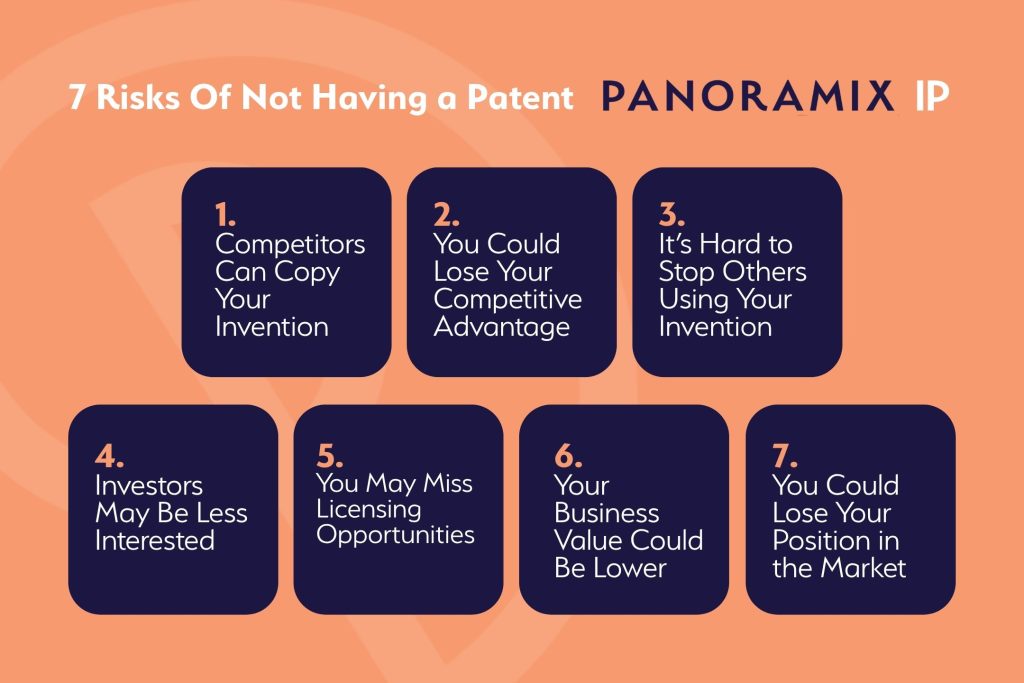
A patent helps protect the time, money and expertise you’ve invested in developing your invention.

Without patent protection, competitors may be able to copy your innovation, reducing your competitive advantage and limiting the return on your investment.

A patent can also:

  • Increase the value of your business.
  • Create licensing opportunities.
  • Strengthen your position when seeking investment.
  • Deter competitors from copying your innovation.
  • Provide a valuable commercial asset that can be sold or licensed.

For many businesses, a patent offers both legal protection and an investment in the value of the business. To get started, get in touch and speak to a patent application lawyer at Panoramix IP.


Top 7 Patent Filing Mistakes

An inventor speaking to a patent lawyer, with his head in his hands

1. Disclosing Your Invention Too Early

One of the biggest mistakes when patenting an invention, is publicly revealing your invention before filing a patent application.

Sharing details online, exhibiting at trade shows, pitching to investors without a confidentiality agreement, or discussing your invention publicly can affect your ability to obtain patent protection in many countries.

If you’ve developed something new, it’s always worth seeking advice on patenting services before making it public.

2. Assuming Your Idea Can Be Patented

Not every idea qualifies for patent protection.

To be patentable, an invention generally needs to be:

  • New.
  • Inventive (not obvious).
  • Capable of industrial application.

Understanding whether your invention meets these requirements before beginning an application for a patent registration, can save both time and money.

3. Skipping Prior Art Searches

Just because you’ve never seen a similar invention doesn’t mean that one doesn’t already exist.

A prior art search helps identify existing patents and published applications, giving you a clearer understanding of whether your invention is likely to meet the novelty requirement. It can also highlight opportunities to refine your invention or filing strategy before submitting an application.

4. Writing the Patent Application Yourself

An IP patent application is much more than a description of your invention.

The wording of the specification and, in particular, the patent claims determines the scope of protection you may ultimately receive. Claims that are too narrow can leave competitors room to design around your patent, while claims that are too broad may be challenged during examination.

Professional patent drafting services can significantly improve the quality and strength of your application.

5. Choosing the Wrong Type of Intellectual Property Protection

Patents aren’t always the most appropriate way to protect an innovation.

Depending on what you’ve created, another form of intellectual property protection – such as a registered design or trade mark, may offer a better solution.

Understanding the different types of IP protection available to your business can help ensure you’re investing in the right strategy from the outset. At Panoramix IP, we offer a free 45-minute IP advice consultation, where our brand protection specialists can talk you through your options.

6. Not Protecting Your Invention With An International Patent

Many businesses assume that obtaining a UK patent automatically protects their invention overseas, but this isn’t the case.

Patent protection is territorial, meaning your rights only apply in the countries where protection has been sought and granted. If you plan to manufacture, sell or license your invention internationally, it’s important to consider your overseas filing strategy and the associated deadlines as early as possible.

Working with an international intellectual property law firm such as Panoramix IP can help simplify the process, ensuring your patent strategy aligns with your commercial ambitions while helping you secure protection in the markets that matter most.

Planning ahead can help preserve your international opportunities, avoid unnecessary costs and maximise the value of your innovation.

7. Waiting Too Long to Seek Professional Advice

Many inventors wait until they’re ready to launch before thinking about their patent application.

The earlier you seek advice, the more opportunities you’ll have to protect your invention, identify potential risks and develop a patent filing strategy that supports your long-term commercial goals. Early guidance can help you avoid costly mistakes and ensure your application is as strong as possible from the start.

If you would like support with obtaining patent protection in the UK or internationally, get in touch with our patent lawyers today, who will offer friendly, expert advice for your business.


Start a Patent Application

At Panoramix IP, our experienced international patent specialists help businesses and inventors navigate every stage of the patent application process, from assessing whether an invention is patentable to preparing robust patent applications and developing international filing strategies.

If you’re ready to start a patent application or would like to discuss your invention with one of our specialists, get in touch with our lawyers today. We’re here to help you.

What Is a Passing Off Claim? Lessons from the Colin vs Cuthbert Dispute

In 2021, Marks & Spencer launched legal action against Aldi over the now-famous Colin the Caterpillar and Cuthbert the Caterpillar cakes, and the story quickly became national news. The case sparked widespread debate, with many questioning whether Aldi had gone too far in creating a similar product, or whether Marks & Spencer had overreacted. Public opinion was divided, and many people rallied behind Aldi, with several other supermarkets even joining the conversation on social media to show their support for Cuthbert in a light-hearted display of brand banter.

While the dispute captured public attention thanks to its light-hearted subject matter, it also highlighted an important area of UK intellectual property law that many businesses know little about: passing off.

Unlike trade mark infringement, a passing off claim does not necessarily rely on having a registered trade mark. Instead, it protects the goodwill and reputation that a business has built over time, preventing competitors from misleading consumers into believing their products or services are associated with another brand.

For businesses of all sizes, understanding passing off claims is essential. Whether you’re launching a new product, growing an established brand, or concerned that another business is benefiting from your reputation, knowing your legal rights can help you protect the value you’ve worked hard to build.

In this guide, our UK and international passing off specialists explain what a passing off claim is, explore the Colin vs Cuthbert dispute as a real-world example, help you understand whether you may have grounds to bring a passing off claim, and outline the steps you can take if another business is attempting to pass off its products or services as your own.


What Is a Passing Off Claim?

A passing off claim is a common law legal action that enables a business to protect its brand against another party that misrepresents its goods or services, leading consumers to believe there is a commercial connection between the two businesses.

Passing off protects businesses that have developed a valuable reputation through trading, even where certain elements of their brand may not be formally registered. In practice, a passing off claim often arises where another business adopts branding, packaging, product names or other distinguishing features that are sufficiently similar to create confusion in the marketplace.

It’s important to note that simply creating a similar product is not automatically passing off. Competition is perfectly lawful. The issue arises where similarities are likely to mislead consumers into believing there is some form of commercial connection between the two businesses.

For this reason, passing off claims often involve careful consideration of consumer perception, branding, marketing and the overall impression created by the products or services in question.


What Are The Three Elements of a Passing Off Claim?

To succeed in a passing off claim, the claimant must satisfy three key legal elements, commonly known as the ‘classical trinity’. This formulation of passing off was set out by Lord Oliver of Aylmerton in the House of Lords, in 1990 (Gov.uk, 2026).

The classical trinity for a passing off claim


The three elements for passing off claims are:


1. Goodwill

The first requirement in the classical trinity is establishing goodwill.

Goodwill refers to the reputation a business has built with its customers. It represents the commercial value attached to a brand through factors such as customer loyalty, recognition and trust.

What evidence can be used to demonstrate goodwill in a passing off claim?

Evidence used to demonstrate goodwill could include:

  • Sales figures
  • Length of time trading
  • Marketing and advertising activity
  • Customer testimonials
  • Press coverage
  • Social media presence
  • Market share

Without goodwill, there is generally nothing for the law of passing off to protect.


2. Misrepresentation

The second element is misrepresentation.

Misrepresentation does not require deliberate deception or outrightly acting as another brand, business, or product. Instead, the courts consider whether the defendant’s actions are likely to lead consumers to believe that their goods or services are connected with the claimant’s business.

What could count as a misrepresentation in a passing off claim?

Things that could be classed as misrepresentation include:

  • Similar product packaging
  • Similar brand names
  • Comparable logos or branding
  • Product shapes or presentation
  • Marketing that creates a misleading association

The key question is whether the average consumer is likely to be confused.

Even if customers eventually realise the products come from different businesses, initial confusion may still be relevant when assessing whether passing off has occurred.


3. Damage

Finally, to be able to make a successful passing off claim, the claimant must demonstrate that the misrepresentation has caused, or is likely to cause, damage to their goodwill.

Alleged damage from passing off may include:

  • Lost sales
  • Damage to reputation
  • Brand dilution
  • Loss of exclusivity
  • Reduced consumer confidence

In some cases, the mere risk of damage may be sufficient, particularly where an established brand has invested significant time and resources into developing its reputation.

Together, these three elements – goodwill, misrepresentation and damage – form the legal foundation of every successful passing off claim.


Colin vs Cuthbert: An Example of a Passing Off Claim

The infamous dispute between Marks & Spencer‘s Colin the Caterpillar and Aldi‘s Cuthbert the Caterpillar is perhaps one of the UK’s most recognisable examples of a passing off claim.

Originally launched by Marks & Spencer in 1990, Colin the Caterpillar has become well recognised. Over the years, Colin the Caterpillar cake has developed a strong reputation with consumers, becoming synonymous with birthdays, celebrations and family occasions. M&S has since expanded the Colin brand into a wider product range, including soft toys, confectionery, tableware, and more, reinforcing its recognition and commercial value.

A generic chocolate caterpillar cake with sprinkles
Pictured: A generic, unbranded caterpillar cake.

In 2021, Marks & Spencer brought legal proceedings against Aldi, alleging that Aldi’s Cuthbert the Caterpillar cake infringed its intellectual property rights. M&S wanted Aldi to remove the product from sale and agree not to sell anything similar in the future (BBC News, 2021). Alongside claims relating to registered trade marks, M&S also relied on the law of passing off.

At the heart of the passing off claim was the argument that Colin had built substantial goodwill over several decades, and that similarities between the two products could lead consumers to believe there was an association between them.

Although the cakes featured different names, there were a number of similarities that attracted attention, including:

  • Comparable caterpillar-shaped chocolate cakes.
  • Similar facial features and decorative elements.
  • Similar packaging presentation.
  • Positioning as celebration cakes for similar occasions.

Ultimately, in 2022, the case was settled privately between the parties, meaning the courts never reached a final decision on whether passing off had occurred (Sky News, 2022).

However, the dispute remains a valuable example of passing off because it demonstrates the types of factors that are considered when assessing a passing off claim. It wasn’t just about whether two cakes looked alike. The legal question centred on whether M&S had established goodwill, whether Aldi’s product amounted to a misrepresentation, and whether that was likely to damage the Colin brand.


The Difference Between Passing Off and Trade Mark Infringement

Whilst passing off and trade mark infringement are often mentioned together, they are separate legal causes of action with different requirements. Both are designed to protect brands, but they do so in different ways. The graphic below explains how.

The difference between passing off and trademark infringement

One of the biggest differences is that a trade mark registration gives businesses an exclusive legal right to use that mark in relation to the goods or services it covers.

With passing off, there is no automatic right. Instead, businesses must prove that they have built sufficient goodwill and that another party’s actions are causing, or are likely to cause, consumer confusion and commercial damage.

This is one of the reasons why registering your trade marks at an early stage can be so valuable. Registration provides a stronger legal foundation for enforcing your rights and may reduce the evidential burden if a dispute arises in the future.

That said, passing off remains an important legal remedy, particularly where valuable goodwill extends beyond the scope of registered trade marks or where elements of a brand have not been formally protected.


Can I Make a Passing Off Claim?

If another business is using branding, packaging or marketing that appears similar to yours, you might have grounds to bring a passing off claim.

For example, if…

  • Your business has developed a recognised reputation or goodwill.
  • Another business is presenting its goods or services in a way that could mislead consumers.
  • Customers have confused the two businesses, or there is a real likelihood of confusion.
  • Your business has suffered, or is likely to suffer, financial or reputational damage as a result.

However, businesses are entitled to compete, and many products within the same market naturally share certain characteristics. When a passing off claim is made, courts will look at the overall impression created, the reputation of the original business, and whether consumers are genuinely likely to be misled.

This is why obtaining specialist legal advice on passing off is so important. One of Panoramix’s experienced intellectual property professionals can assess the strength of your position, review the available evidence, and advise on the most appropriate course of action before matters escalate.

Equally, if you’re developing a new brand or product, seeking advice before launch can help identify potential risks and reduce the likelihood of infringing another business’s intellectual property rights.

At Panoramix IP, we offer a free 30-minute IP consultation, where we can offer advice on your situation, and advise on whether we believe you may have grounds for a successful passing off claim.


How Do I Make a Passing Off Claim?

If you believe another business is unfairly benefiting from your brand’s reputation, it’s important to act promptly. While every dispute is different, the process of making a passing off claim typically involves gathering evidence, assessing the legal position and, where appropriate, taking action to protect your rights.


1. Establish Your Goodwill

The first step is demonstrating that your business has built goodwill in relation to the relevant products or services.

Evidence may include:

  • Trading history.
  • Sales figures.
  • Marketing and advertising campaigns.
  • Customer reviews and testimonials.
  • Website traffic and social media engagement.
  • Press coverage and industry recognition.

The stronger the evidence of your reputation, the stronger the foundation of your passing off claim is likely to be.


2. Gather Evidence of Misrepresentation

Next, you’ll need to consider whether another business is making a representation that is likely to confuse consumers.

Useful evidence might include:

  • Photographs of competing products.
  • Examples of similar branding or packaging.
  • Marketing materials.
  • Customer enquiries demonstrating confusion.
  • Social media comments or reviews.
  • Correspondence from distributors or retailers.

It’s important to remember that actual confusion is not always required. In many cases, evidence that consumers are likely to be misled may be sufficient.


3. Demonstrate Damage

You’ll also need to consider how the alleged misrepresentation has affected your business.

Claims of damage may include:

  • Lost sales.
  • Damage to your brand’s reputation.
  • Loss of licensing opportunities.
  • Reduced exclusivity within the market.
  • Harm to customer trust.

In some circumstances, the likelihood of future damage may also be relevant.

4. Seek Specialist Intellectual Property Advice

Passing off claims can be legally and evidentially complex. At Panoramix IP, our top passing off lawyers help businesses protect their brands through practical, commercially focused intellectual property advice. From trade mark protection and brand strategy to passing off claims and dispute resolution, our experienced team can help you understand your options and take the most appropriate next steps.

Depending on the circumstances, these may include:

  • Reviewing the available evidence, or gathering evidence.
  • Advising on the prospects of success.
  • Preparing and sending a letter before action.
  • Exploring settlement or alternative dispute resolution.
  • Commencing court proceedings where necessary.

Equally, if allegations of passing off have been made against your business, obtaining early advice from our top rated passing off lawyers can help you assess your options and respond appropriately.

If you’d like to discuss a potential passing off claim or any other intellectual property matter, get in touch with our passing off lawyers for tailored advice.

Get In Touch